
The 1978-79 UMBC men’s basketball team won the NCAA Division II South Atlantic Regionals Championship on March 3, 1979. The Baltimore Sun reported: “John Goedeke’s 2 free throws with 7 seconds remaining enabled the University of Maryland-Baltimore County to edge Virginia Union College 58 to 56, last night.” Although the…Read More

The 1980 UMBC men’s lacrosse team brought glory to the campus by winning the first national championship in school history. During the regular season, the team won strong victories over Salisbury State (21-11), Delaware (22-12), and perennial Division I powerhouse University of North Carolina (18-9). The team defeated Adelphi University…Read More

“One thousand students packed into the quad Monday, chanting slogans, waving placards, and cheering speakers in the largest mass meeting in UMBC’s recent history. The rally followed reports in the Sunpapers, News American, and the Washington Star of a State Board of Higher Education proposal to close down UMBC and…Read More


UMBC celebrated the first Quadmania on Saturday September 19, 1981, and it has since become a treasured campus tradition. Part concert, part carnival, Quadmania has been UMBC’s main social event ever since for students, alumni, and the surrounding community. University Publications, newspapers; articles, 11.2 x 16.

As the map on the back cover of the 1982-83 UMBC Student Directory shows, buildings were traditionally named for their function (e.g. Lecture Hall 1 or Chemistry/Physics); the dormitories were named for Maryland bodies of water (e.g. Susquehanna Hall) or for miscellaneous reasons (e.g. West Hill Apartments which are actually…Read More

The University Center opened to praises at the start of the 1982 fall semester with couches for quiet study, dining options, and offices for the SGA and the Retriever. In 1981, SGA president Terry Nolan proposed that the old Student Union building could then be repurposed into a daycare center,…Read More

The library went unnamed, aside from Library or University Library, until the official dedication ceremony on December 13, 1982 when it was named for UMBC’s founding chancellor, Albin O. Kuhn. The occasion was hosted by Chancellor Dorsey and took place in the Special Collections Reading Room. The standing room only…Read More

Both a symbol and a signpost, the silo serves as a sentinel along UMBC Boulevard, reminding those entering and leaving campus about the school’s agrarian past. Built about 1919 when Spring Grove State Hospital owned the property, the silo is a traditional style made of concrete reinforced with metal hoops.…Read More

Conflicting opinions about the naming scheme of UMBC’s buildings, and Academic IV in particular, motivated the formation of a committee to propose a formal process by which names could be approved. The report of the committee was sent to the UMBC Faculty Senate in March 1983. The committee recommended that…Read More

“Created in 1985 by the Board of Regents, the UMGSB represents the administrative arm of the combined graduate and research programs at UMBC and UMAB – the University System’s doctoral research campuses in the Baltimore area… It was the Regents’ intention that the combined graduate and research programs at UMBC…Read More

UMBC’s earliest access to mainframe computing was through telephone connections to a Univac computer at University of Maryland, College Park. In 1981, UMBC Vice Chancellor for Academic Affairs Walter Jones was presented with an opportunity to acquire a Control Data mainframe computer system called “Cyber.” UMBC did not have the…Read More

The predecessor of the Honors College was established in 1980, with options for both a general Honors Program and individual departmental honors programs. Students enrolled in the Honors Program were able to select from courses that boasted “smaller classes, more and livelier discussion, and more opportunity for independent study projects.”…Read More

During Dorsey’s nine years of leadership, he focused on restructuring administration and academics while enhancing the university’s profile. SAT scores of incoming freshmen increased by nearly 100 points, and the student body increased from 5,200 to more than 8,150. The annual budget also expanded to $46.2 million from just $18.6…Read More
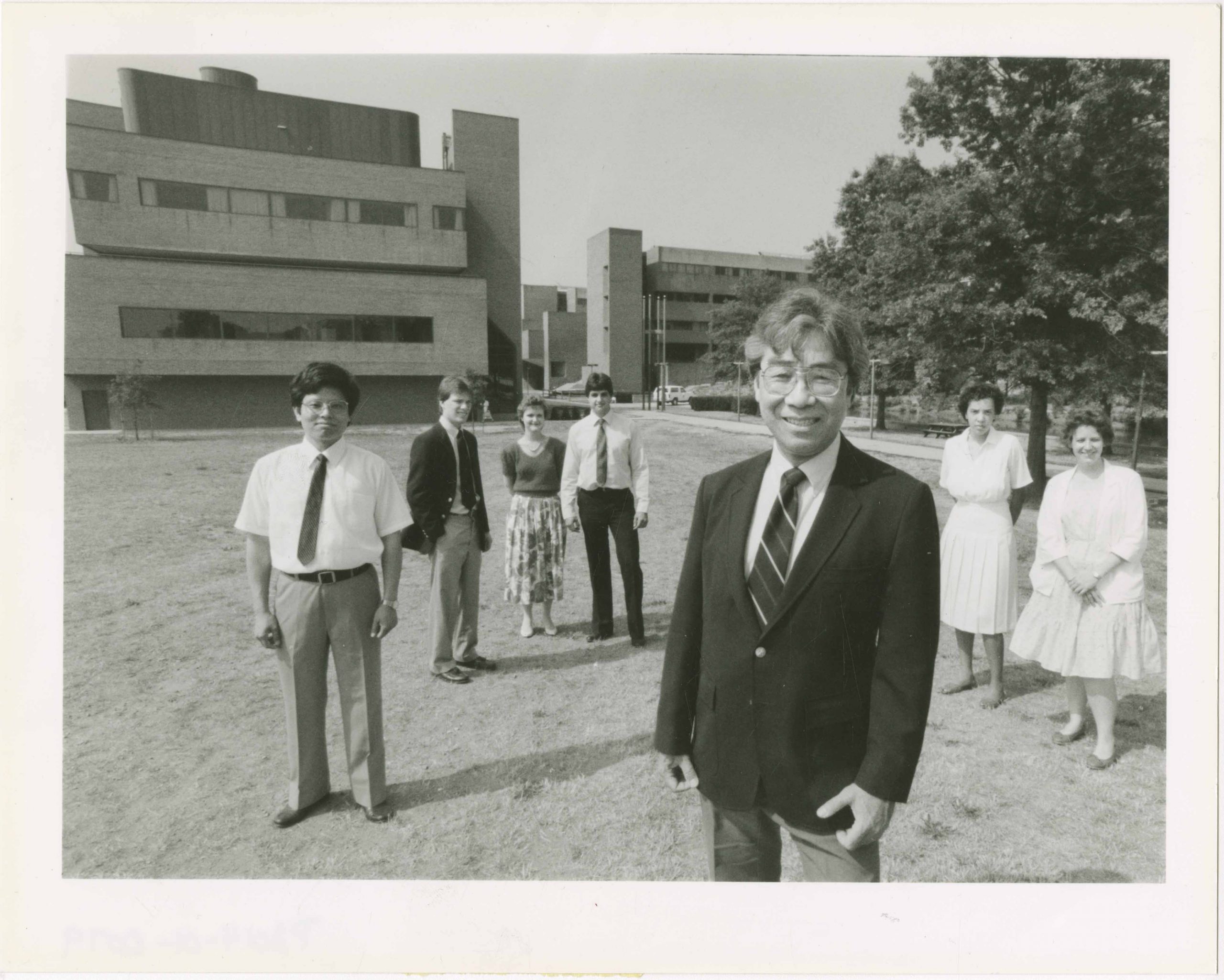
The Maryland State Board of Higher Education approved engineering bachelor’s, master’s, and doctoral programs at UMBC in 1984, though not without heated competition from Morgan State University. Previously, pre-engineering classes were offered at UMBC, but students had to transfer to University of Maryland, College Park to complete their degrees. Both…Read More

Nationally-known illustrator Lance Hidy designed the poster commemorating the 20th anniversary of the university. His work is known for its minimal detail and flat, solid colors. The university also commissioned artist and alumna Paulette Raye to create the bronze-cast statue of True Grit for the anniversary, although it wasn’t installed…Read More

“All institutions of higher education seek to preserve the past. We are citadels of learning, guardians of culture. We recognize that the past is prologue, and know that those who fail to study history are doomed to repeat it. But progressive institutions seek also to read the future, to analyze…Read More
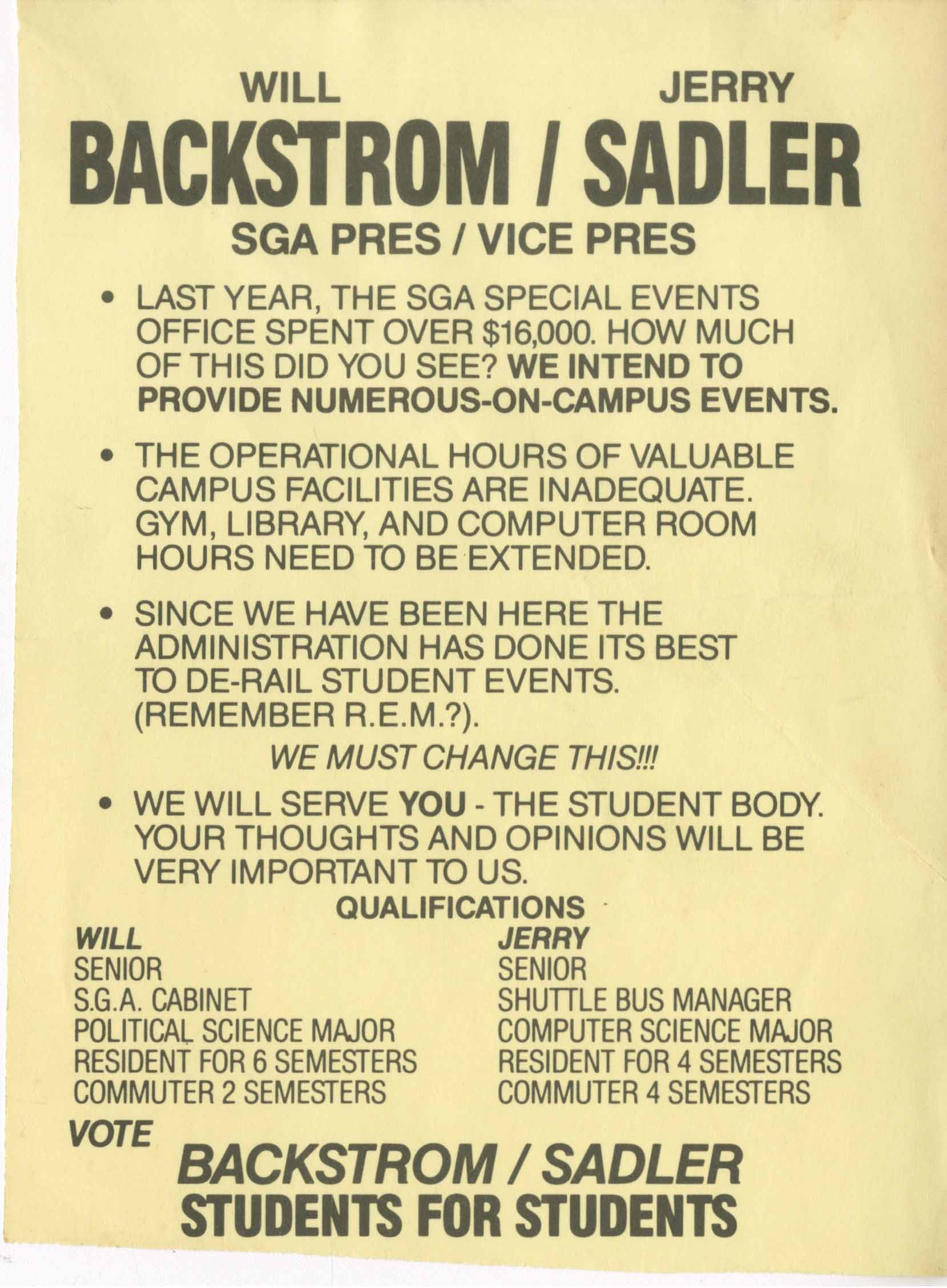
The first issue of the student newspaper in 1966 reported that the university would install a Student Government Association that would “provide for self-government under the jurisdiction of the university’s administrative and faculty personnel.” The article set forth that the SGA would create the policies that governed the activities and…Read More
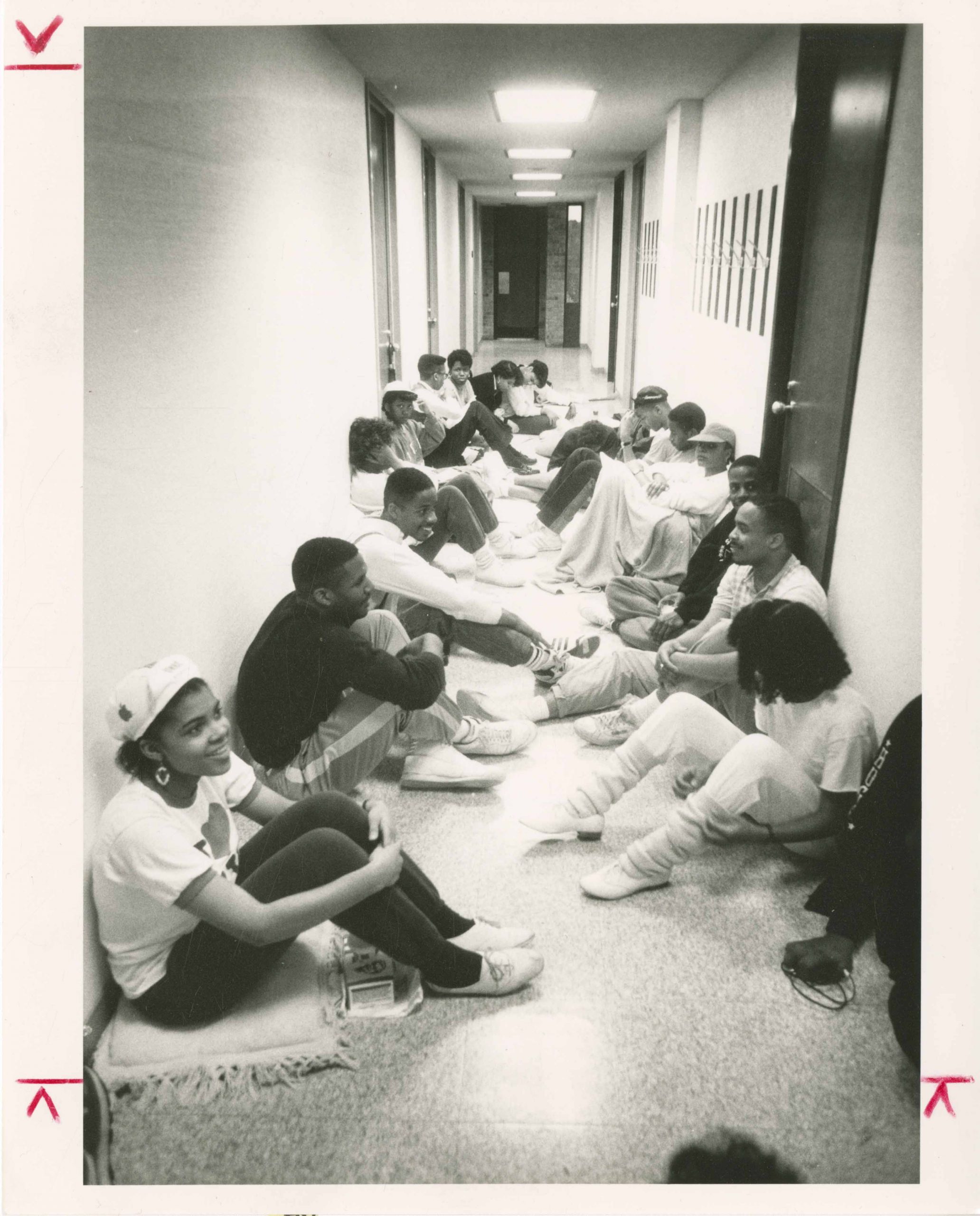
On April 15, 1987, approximately 100 students occupied the tenth floor of the Administration Building outside of Chancellor Michael Hooker’s office. The protest was a result of two racially-motivated incidents on campus. Among the requests submitted by the student protesters was the formation of an Office of Minority Affairs. About…Read More

In 1986, UMBC commissioned alumna Paulette Raye ‘87, philosophy, to create a bronze-cast model of the Retriever for the school’s 20th anniversary. Raye worked in a studio at Towson University, using a Chesapeake Bay Retriever named Nitty Gritty as her model. The 500-pound, life-size statue was unveiled on December 7,…Read More

Chancellor Michael Hooker and Director of Athletics Rick Hartzell hosted the unveiling ceremony for the True Grit statue on December 7, 1987. University Photographs, color slides; color photographs.

In 1988, Governor William Donald Schaefer signed a bill that would completely change the way Maryland divided the state’s academic budget and programs. The newly created University System of Maryland (USM) would bring together the five University of Maryland campuses and six other public colleges. The bill also created a…Read More

Frames of Reference: Photographic Paths was the first exhibition held in the newly established Fine Arts Gallery in 1989. The exhibit featured the work of nationally-known artists Zeke Berman, George Blakely, Eileen Cowin, John Craig, Robert Cumming, Darryl Curran, Fred Endsley, William Larson, Bart Parker, Victor Schrager, and the Starn…Read More

Shakespeare on Wheels was created by UMBC Theatre professor William Brown. While teaching at the University of Ibadan in Nigeria, his mobile Elizabethan stage traveled more than 4,000 miles throughout the country, and in 1985, the UMBC Theatre Department adopted the idea to bring Shakespeare to Baltimore. The department funded…Read More

The UMBC Review was a popular alumni newsletter started in the 1980s to keep the community up-to-date on campus happenings and research. This issue shows the establishment of the first Presidential Research Professor, Robert K. Webb, History, and Presidential Teaching Professor, Jay Freyman, Ancient Studies; a public art project by…Read More

The proposed merger of UMBC and the University of Baltimore was not without controversy. In many Letters the Editor published by the Baltimore Sun, readers pointed out that combining two schools with different students and missions (UB served primarily working professionals and graduate students) made little sense, and expressed dissatisfaction…Read More

In September 1987, President Michael Hooker informally proposed three new names for UMBC: 1) Maryland State University; 2) Maryland State University and Technical Institute; and 3) Maryland Institute of Technology. The topic was later taken up by the Faculty Senate Committee on Statewide Reorganization and they distributed a name change…Read More

In 1977, the campus Women’s Union proposed a full-time daycare facility. Although the expense for salaries and playground equipment would be significant, the Union argued that costs would be offset by increased enrollment of mothers with small children. The proposal was not approved, prompting the formation of a Day Care…Read More
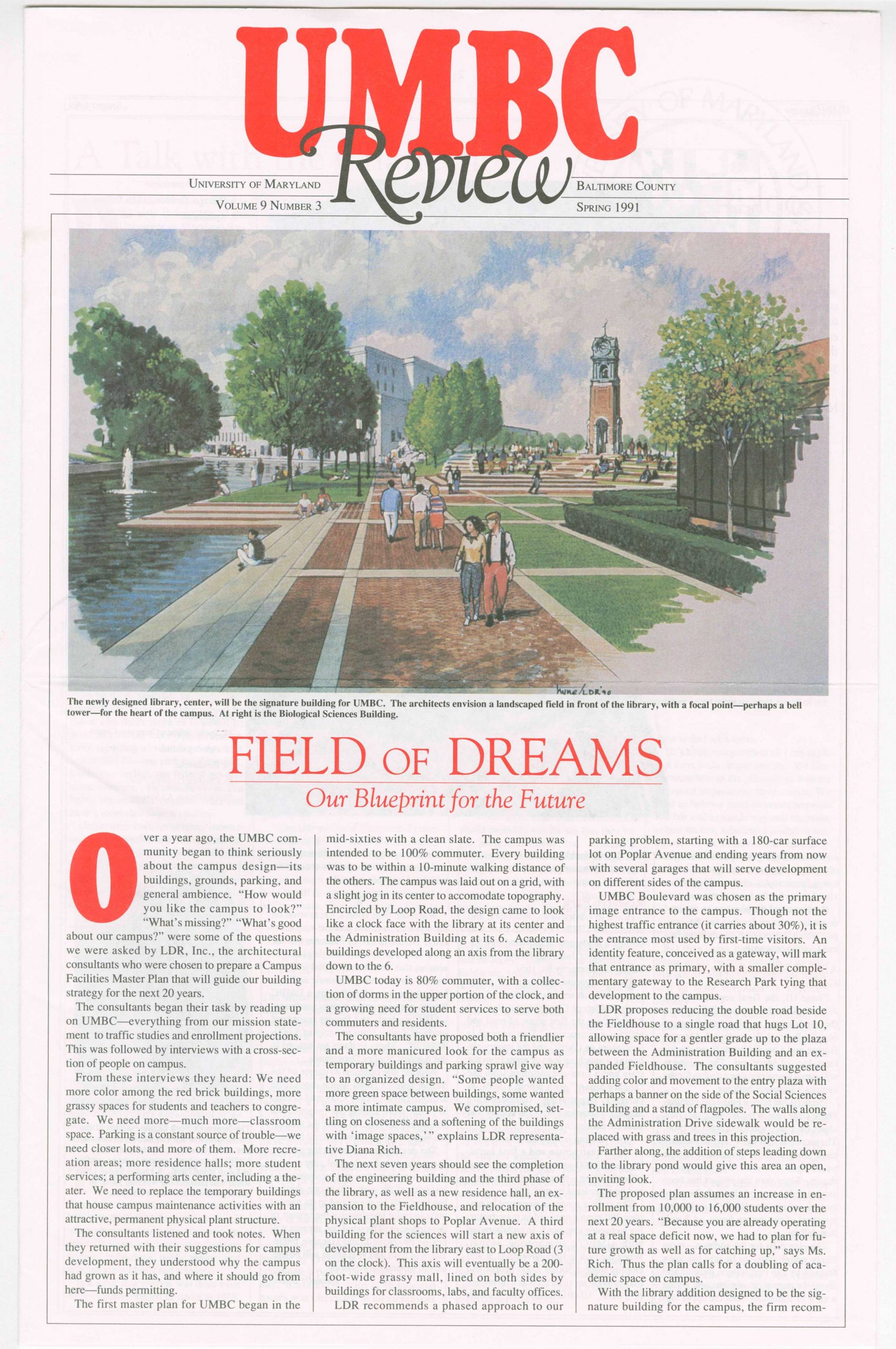
In the early 1990s, architectural consultants LDR, Inc. prepared a Campus Facilities Master Plan that outlined how UMBC would structurally grow over the next 20 years. Basing the plan on everything from traffic studies and enrollment projections to campus interviews, LDR projected that the next seven years would see additions…Read More

In 1991, the Maryland Higher Education Commission recommended that the Board of Regents consider merging UMAB and UMBC in order to create one larger research university. In response, Chancellor Donald Langenberg created the UMAB/UMBC Task Force on Unification; in fall 1991 the task force announced its recommendation that the two…Read More

The President’s Convocation on September 19, 1991 celebrated the university’s 25th anniversary. The gathering featured speeches from special guests such as former chancellors Albin O. Kuhn and John Dorsey. Maryland State Comptroller Louis Goldstein was on hand to speak about his role in finding UMBC’s current site. A special Gallery…Read More

Congressman Benjamin L. Cardin represented Maryland’s 3rd district and sponsored congressional recognition of UMBC on the occasion of its 25th anniversary. Cardin has served as a United States Senator from Maryland since 2007. Institutional Advancement records, Collection 97, congressional records, 8.5 x 11.

A group of the founding faculty and staff gathered for a portrait by photographer Tim Ford on the occasion of the 25th Anniversary of UMBC. Just a few of their stories include: David Lewis, Professor of Sociology and Anthropology, was a native of Wales, a Royal Canadian Air Force pilot…Read More

In 1991, the Maryland Higher Education Commission recommended that the Board of Regents consider merging UMAB and UMBC in order to create one larger research university. In response, Chancellor Donald Langenberg created the UMAB/UMBC Task Force on Unification; in fall 1991 the task force announced its recommendation that the two…Read More

In Spring 1992, UMBC’s men’s baseball team became the university’s first team to make it to a NCAA regionals tournament. The team had previously played in the Division II Regionals in 1979, 1980, and 1986. The Retrievers, with a 37-11 record, were sixth-seeded and set to take on the first-seeded…Read More
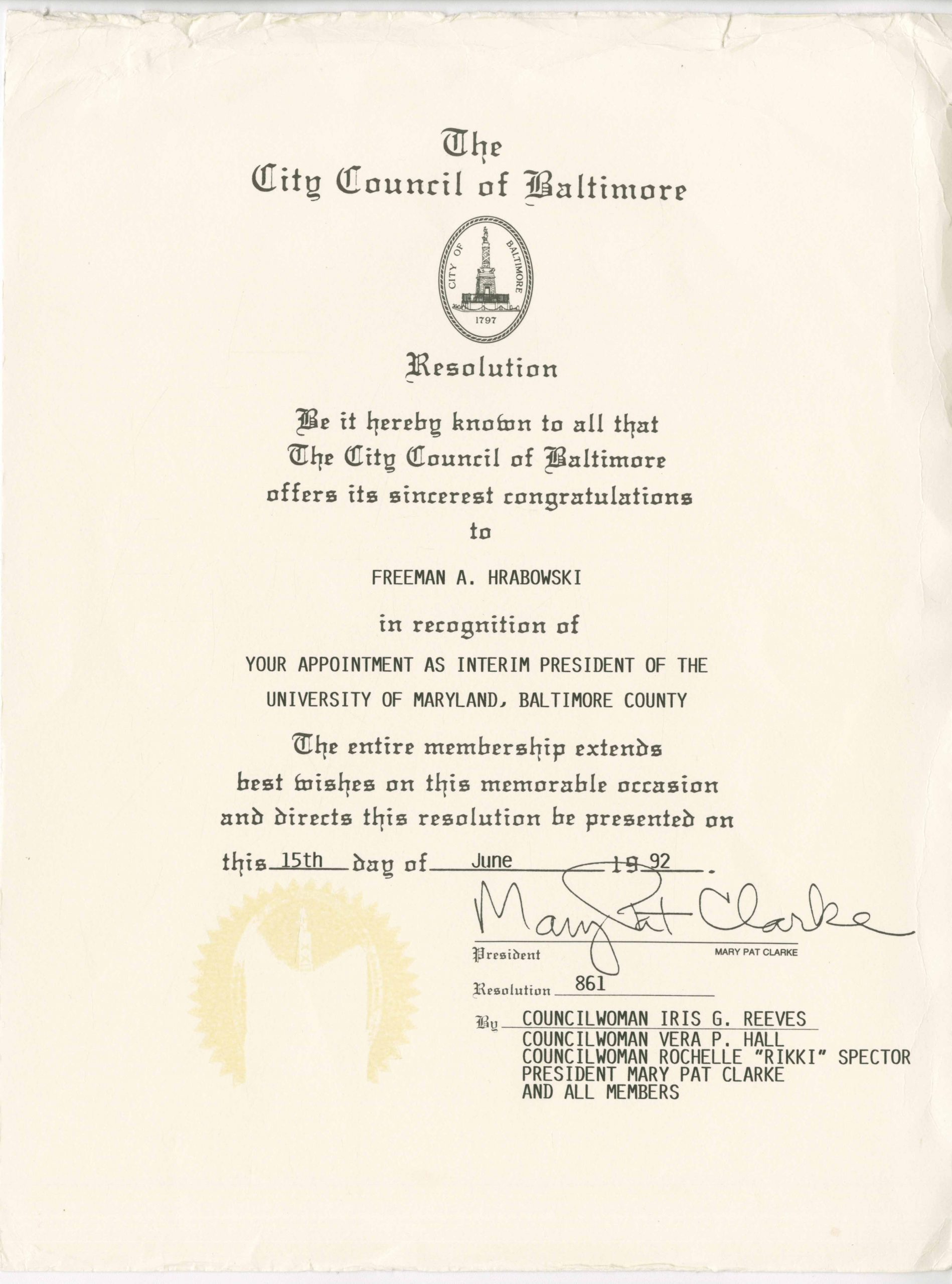
During the summer of 1992, President Michael Hooker left UMBC to take the helm of the five-school University of Massachusetts System. Freeman Hrabowski, who had first served as Vice Provost and then as Vice President, was selected as the interim president. A search for a new president would not begin…Read More

Michael Kenneth Hooker (1945-1999) followed John Dorsey as chancellor of the university in 1986. Hooker looked forward to the challenge UMBC presented as it did not yet have a widely-recognized reputation or competitive status. Although Hooker earned his doctorate in philosophy, he was intrigued by the idea of developing UMBC…Read More

During the summer of 1992, President Michael Hooker left UMBC to take the helm of the five-school University of Massachusetts System. Freeman Hrabowski, who had first served as Vice Provost and then as Vice President, was selected as the interim president. A search for a new president would not begin…Read More


Inscription reads: “What a wonderful day in the life of this university and in my life. We at UMBC are very fortunate.” –9/24/93 Freeman Hrabowski. University Publications, programs (documents), 8.5 x 5.5.