Categories

Oella’s Spirit of ’76

Alan Christian (WBAL Talk Radio host) with reenactors outside Oella Community Hall, 1976.
Johnnycake Junior High Band, 1976.

This summer, the United States began celebrating its 250th anniversary as an independent nation. Many of us gathered with friends and family, attended cookouts, watched fireworks, and thought about what it means to be an American. The Fourth of July is ripe with tradition that dates back to July 3, 1776. That’s right, the day before the Second Continental Congress adopted the ratified Declaration of Independence, John Adams wrote his wife Abigail stating, “It ought to be solemnized with Pomp and Parade, with Shews, Games, Sports, Guns, Bells, Bonfires and Illuminations from one End of this Continent to the other from this Time forward forever more.”

Continental Soldier student band, 1976.

And the very next year that is exactly how people celebrated, decorating their towns with colorful streamers and illuminating the night sky with grand firework displays. John Adams and Thomas Jefferson would both die on the 50th anniversary of the signing of the Declaration of Independence, prior to its official status as a national holiday.

Fifty years ago, in 1976, the small town of Oella, Maryland celebrated America’s Bicentennial. The Maryland Traditions Archive houses three collections that centers on Oella, including the Mills of Baltimore County collection which features these wonderful photos. Tucked away in the woods along the Patapsco River outside Ellicott City, Oella was built in 1808 as a mill village for the workers of the Union Manufacturing Company. This textile manufacturer would eventually be taken over by W.J. Dickey & Sons, Inc. who produced men’s high-end woolen suits.

Woman in front of flower stand, 1976.

Generations of families worked and lived alongside one another within Oella’s secluded hills. And just like in small towns and large cities across the United States, Oella’s residents came together as citizens and neighbors, continuing the long tradition of our country’s Independence Day celebration. Families would pack large picnic lunches and go out to what was known as “Picnic Woods.” There were sack races, potato races and baseball games. In the evening, there was dancing on a large wooden platform that had been erected a day or so earlier by the mill carpenters.

Abraham Lincoln reenactor reciting the Emancipation Proclamation, 1976.
Ola Belle Reed and family performing for Oella, 1976.

Oella’s Bicentennial festivities featured a parade with Continental soldiers; the Johnnycake Junior high school marching band; Girl Scout troops, and military veterans; as well as a reading of the Emancipation Proclamation by an Abraham Lincoln reenactor and a performance by Ola Belle Reed and family. It even had those creepy Belly Button Whistlers I had so happily forgotten about.

Belly Button Whistlers, 1976.

We only have the photos from the bicentennial celebration in Oella – no diaries or videos exist in the collection. Looking at this archive is like looking into a family photo album from the past, you can almost smell the honeysuckles and charcoal grills, and hear the conversations and laughter between neighbors. It gives a feeling that the comradery and magic is still here. We just need a reminder once and a while.

Oella residents at festival, 1976.

Coll349: The Mills of Baltimore County collection is available for research in our Reading Room. This post was written by Mark Breeding, Maryland Traditions Archivist.

Sources:
Adams, John. Letter from John Adams to Abigail Adams, 3 July 1776.
UMBC Special Collections, Maryland Traditions Archive. Mills of Baltimore County collection, Series I, Subseries I.C, Box 1, Folder 48
.

Categories

Archiving as a Care-Full Practice

Given the impact volunteering at UMBC’s Special Collections had on me over the fall semester, I felt compelled to return in the spring. And so I did, diving back in with a sense of familiarity and an ever-growing curiosity that led me to new and unexpected aspects of archival work. At the heart of this curiosity was the recognition that archival work is a form of care – care for people, their stories, and the spaces that hold them. 

My duties for the Maryland Traditions Archives (MTA) remained largely consistent from the fall. I continued to hone my processing skills, this time pivoting to an Oella Company records box in Collection 348 with materials related to the George Ellicott House Restoration Project. Meticulously sorting through correspondence, fact sheets, and meeting notes deepened my understanding of the persistence and resilience involved in historic preservation, work driven by the dedication to maintaining a building so vital to the region’s history. Archivists in Special Collections embody that same dedication, whose daily efforts reflect care and stewardship for people and their histories. In addition to processing, a few unexpected tasks came up. I helped prepare materials for an archiving class by reviewing folders for sensitive content and supported the lighting setup for a photoshoot with Gef, Special Collections’ resident mascot, both of which reflect the quiet, behind-the-scenes efforts that contribute to the purpose of the archive. 

What I found most meaningful this semester, though, was the opportunity to volunteer at MTA’s “Digitization Day,” an event focused on preserving the histories of Baltimore’s American Indian community. Sitting beside Susan Graham, Special Collections Librarian, in the South Broadway Baptist Church, I interviewed a community member while she scanned their documents. I was honored to learn the history behind the certificates, programs, and pictures the community member brought. Even after the event, as I transcribe the interview, I am struck by the narratives shared—an experience that will stay with me far beyond my time at UMBC.

Samantha DiNatale and Susan Graham, Digitization Day 2025

Volunteering at Special Collections was a way to more deeply engage with my own research – to dig deeper into the methods I used for various projects. Now, it feels like a way to serve broader historical justice. Through processing records, preparing archival materials for instruction, and helping preserve community memory, I’ve come to see archival work as a research tool and a form of care. I am deeply grateful to Maryland Traditions Archivist Mark Breeding and the Special Collections team for their mentorship, trust, and generosity this year. What I have learned and experienced is invaluable.

This post was written by graduate student volunteer, Samantha DiNatale, M.A. ’25.

Categories

“The Other Side of the Archives:” Volunteering in Special Collections

Across the span of three years, I have repeatedly turned to archival work as a method in my academic research. As a sophomore at the University of New Hampshire, I sat in the library’s basement, combing through Seacoast newspapers in search of public opinion on a proposed oil refinery project. Now, as a second-year master’s student here in the Geography and Environmental Systems department, I use Baltimore City newspapers to assess who was portrayed as at fault for the Baltimore lead poisoning crisis and how mothers were often unjustly blamed for the poisoning of their children. After all of this research experience, I realized there must be something about the archives that keeps me crawling back.  

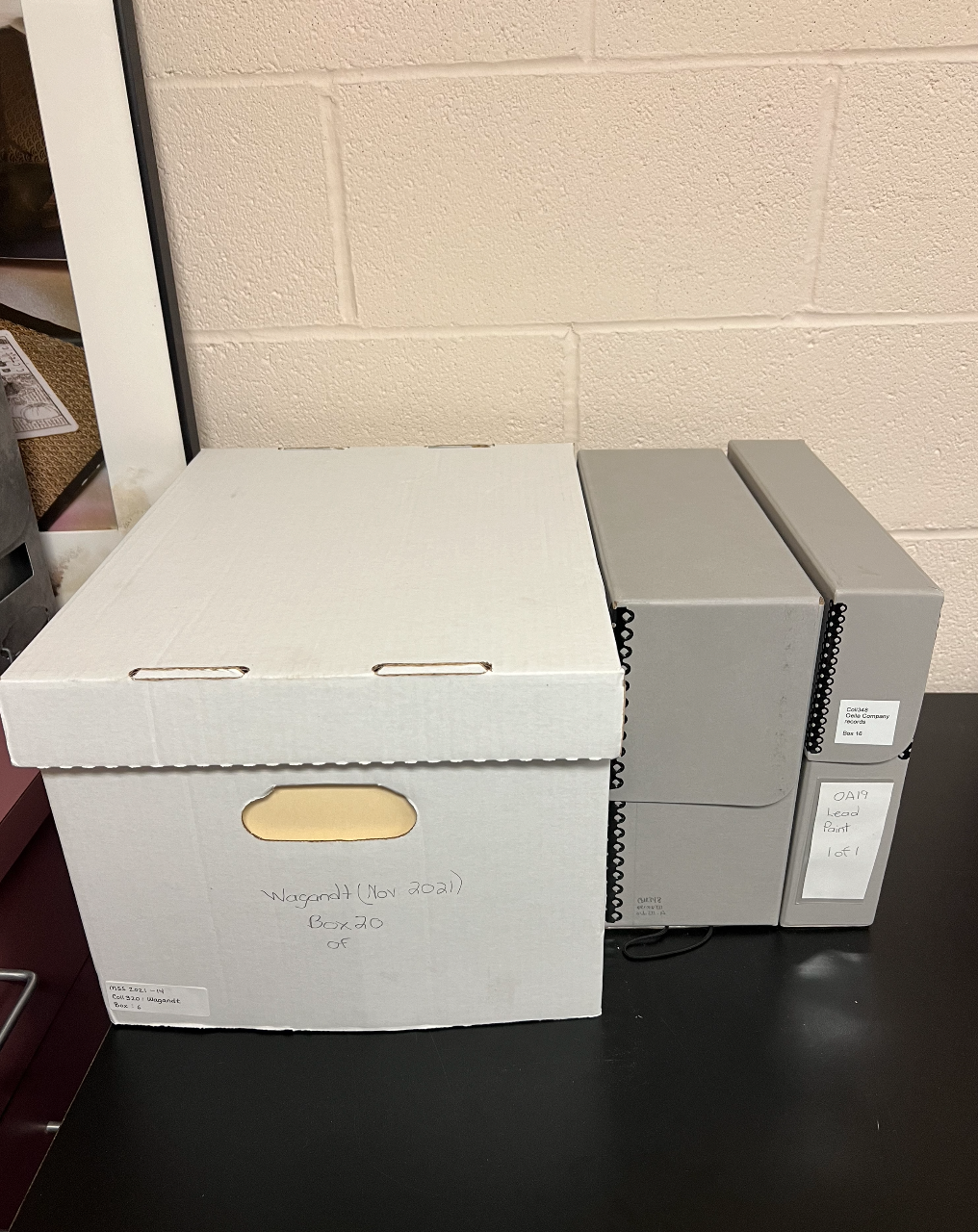
Oella Company records. Collection 348, Series III, Boxes 1-3.

This lightbulb moment gave me the idea to volunteer at UMBC’s Special Collections, where instead of using archives as a research methodology – I can be on the “other side,” learning how archivists work to make historical materials accessible to the public. I ended up under the advisement of Mark Breeding, Maryland Traditions Archivist, where my primary responsibility was archival processing. I combed through a few boxes of Collection 348 – the Oella Company Records – and inputted their contents into a container list. I recorded housing applications, nearly 70 folders on Oella, Maryland restoration efforts and town happenings, and – strongly related to my master’s thesis research – processed a box on lead paint materials. Processing the latter was especially meaningful, thinking about the possibility of someone using these records to reclaim stories, as I have done with newspapers.

When I first started volunteering at Special Collections, I never imagined reading so many financial documents, learning about water treatment plans for nitrate-contaminated wells, or seeing pretzel-related crimes documented in such detail. Because of it, though, I have realized why I keep coming back – the ability of archives to tell stories lost to time. I now possess a deeper understanding of the work of archivists and the power they hold to preserve and share people’s lived experiences. This experience of volunteering at Special Collections was invaluable and will no doubt sway my future path. 

This post was written by graduate student volunteer, Samantha DiNatale, M.A. ’25.

Categories

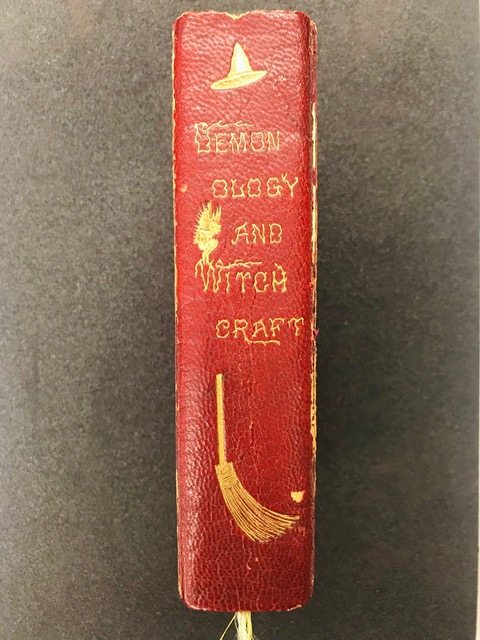
Open House 2024 Highlight: Demonology and Witchcraft

Scott, Sir Walter. Letters on Demonology and Witchcraft, Addressed to J. G. Lockhart, Esq.(Illustrated by George Cruikshank). London: John Murray, 1830.

Belief in witchcraft, magic, and sorcery has been prevalent throughout history and practiced all over the world: in ancient Mesopotamia, the Middle East, Africa, the Americas, Europe, Oceania, and all through the Asian continent. Each culture and region hold different beliefs and attitudes toward these practices. While there are both helpful and harmful forms of magic stemming from regional folklore, in America we tend to associate witchcraft with pagan ritual and heretical malevolence against Christianity. This is largely due to early European influence, the paranoia and efforts of those associated with the Catholic and Protestant church, and through the sheer volume of their writing and admonition of the subject during the medieval and colonial periods. Accordingly, any belief or practice outside those deemed acceptable by the social and cultural standards were subject to scrutiny. And accusations of sorcery and witchcraft (specifically toward commonfolk) had dire consequences.

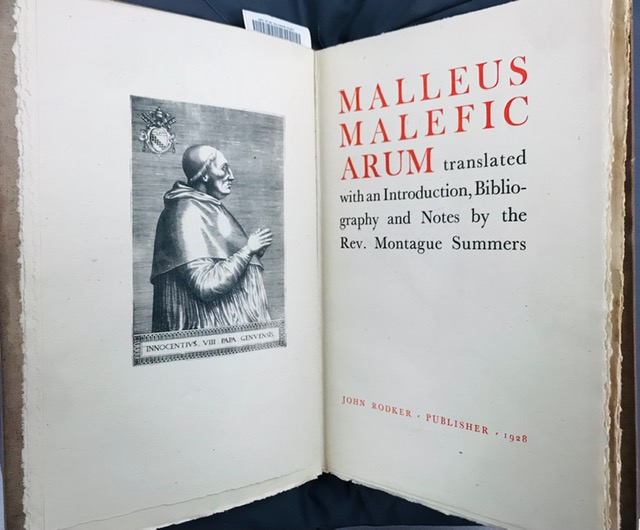
Institoris, Heinrich and Jakob Sprenger. Malleus Maleficarum. London: J. Rodker, 1928.

The Malleus Maleficarum, written in 1486, is one of the first texts ever published on the subject of witchcraft. Written by two German theology scholars and members of the Dominican order, the work set out to prove the existence of witches as heretics and acted as a manual to rid them from society through trials, torture, and brutal deaths. The Malleus Maleficarum, which translates to “Hammer of Witches,” was instrumental for creating nearly three centuries of witch-hunting hysteria throughout Europe and North America.

It was the belief that witches, most commonly associated with women, had pacts with the Devil to undermine the virtue of Christianity or disrupt the natural world. Witches rode atop animals during the night to hold meetings with Satan, fornicated with demons, caused crop failures, killed children and prevented married couples from conceiving through spells, among other heresies. This interaction between women, Satan, and clandestine activity was paramount in the Christian European mindset toward witchcraft, especially during the Reformation.

Scot, Reginald. The Discoverie of Witchcraft. London: J. Rodker, 1930.

Reginald Scot’s The Discoverie of Witchcraft (1584) was written nearly 100 years after the Malleus Maleficarum. Scot was the first English writer to expound upon the subject of witchcraft and he intended to disprove the theory that witches contained real supernatural powers, but were instead resourceful women who practiced the art of folk healing. Scot rejected the idea that Satan or any supernatural being could interact with humans, and that the charms of witchcraft, or indeed even the rites of Catholicism, were merely superstitious. Because of these beliefs, Scot’s contemporaries condemned him as impious. Even King James VI rebutted Scot’s theory with his own Daemonologie (1597), which focused largely on necromancy and doubled down on the threat witches posed. It was rumored that James had ordered every copy of Scot’s book to be destroyed, but there is no evidence to support this. However, after the first edition, The Discoverie of Witchcraft was not published again in England for nearly 70 years.

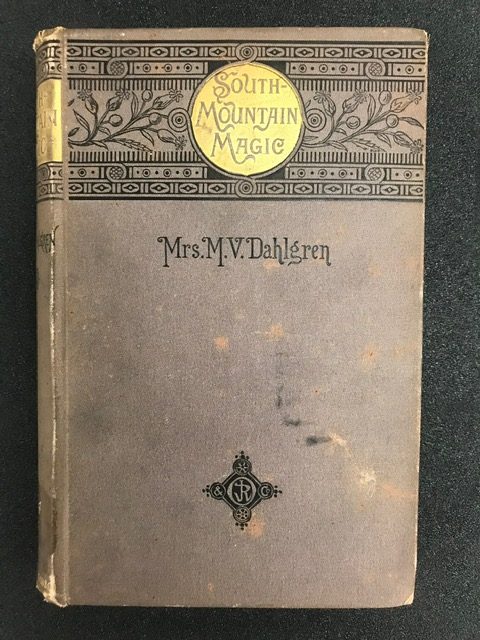
Dahlgren, Madeleine Vinton. South Mountain Magic, a narrative. Boston: J. R. Osgood, 1882.

During the period after Scot’s death, the thesis he set out to prove as a testament to reason and critical thought took on a perhaps cursed irony. The magic and sleight of hand Scot tried to uncover were seized upon by his more esoteric successors and spread into popular culture, cementing their place into witchcraft ethos. Even Shakespeare was likely to have been influenced by Scot when writing Macbeth.

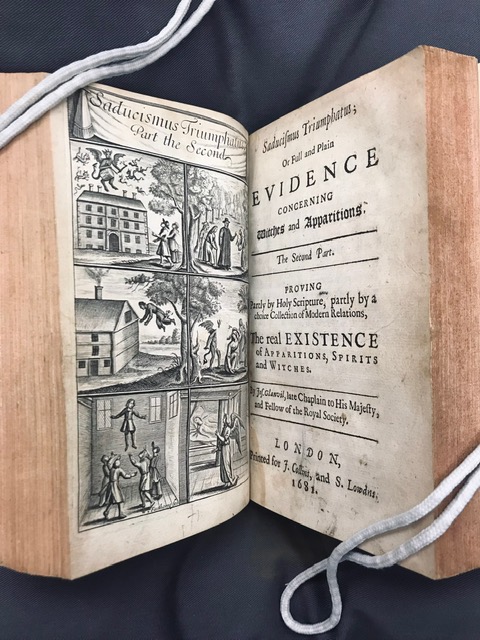
Glanvil, Joseph. Saducismus Triumphatus: or, Full and plain evidence concerning witches and apparitions. London: Printed for F. Collins and S. Lownds, 1681.

Well after the hysteria of the witch-trials had ended in Europe and America, rural traditions held on to the superstitions and beliefs of the occult. Madeleine Vinton Dahlgren’s South Mountain Magic, published in 1882, described the folklore of ghosts, witches, and demons of South Mountain, located near Boonsboro, Maryland. She described local lore such as the Snarly Yow (a giant demon-like dog), haunting apparitions, as well as magic cures for common ailments.

The mid-twentieth century brought about newfound interest in the occult through neopagan groups like Wicca, Anton LaVey’s Church of Satan, and a proliferation of authors and film directors that showcased, and often exploited, these ideas through new mediums. Today we have a better understanding of how these “superstitions” and social accusations originated that were tragically cast upon women (and men as well). So, as Samhain approaches and we celebrate the year’s harvest and the changing of the Hunter’s Moon, feel free to light some candles, open an old book, and conjure the spirits of our historical past.

View these titles and more by request in our reading room. This post was written by Mark Breeding, Maryland Traditions Archivist.

Categories

Environmental Comics and the Alternative Press Center

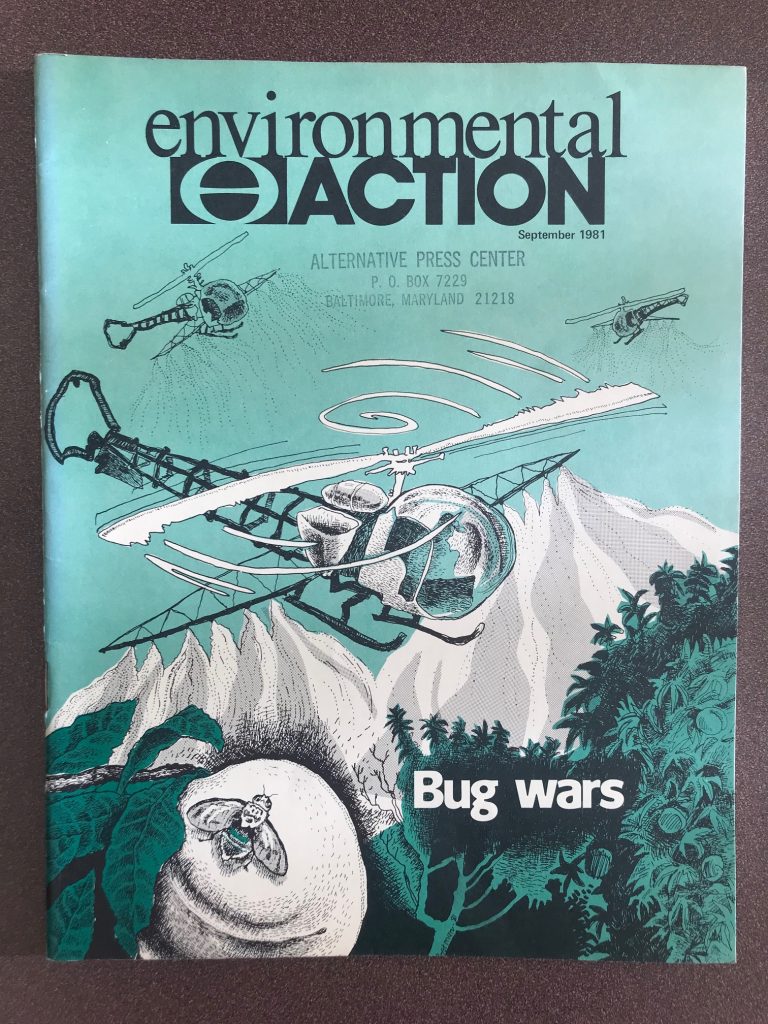
Environmental Action (September 1981).

It may seem odd to relate the satirical and often raunchy style of Underground Comics with Alternative Press and Radical Literature publications that tackle serious social and political issues. However, comics often served as a stepping stone into the world of politics for many young readers. Just as musical genres like punk rock or hip-hop have brought political awareness to its listeners, comics allowed individuals the chance to dip their toes into more tumultuous waters through a medium that they were attracted to and identified with. Complexity was always an asset to alternative publications that defined youth culture.

More sub-genres emerged, some more radical than others. And comics continued to tackle social and political problems that became pressing issues by the end of the 20th century.  The environmental movement fought against industrial pollution and promoted a healthier and more sustainable lifestyle. They critiqued capitalism, claiming that it encouraged pollution and deforestation by cutting corners to increase profit margins.

Green Social Thought # 63 (Winter 2014) Published by Institute for Social Ecology.

Anarchist and socialist movements often grouped together to produce comics from a variety of artists due to their mutual rejection of the capitalist governmental structure. Many of these comics influenced and inspired local activism, and began circulating on college campuses. UMBC had its own, The Red Brick, a socialist student run newspaper running from 1969-1970. All three issues are scanned and available online through our digital collection.

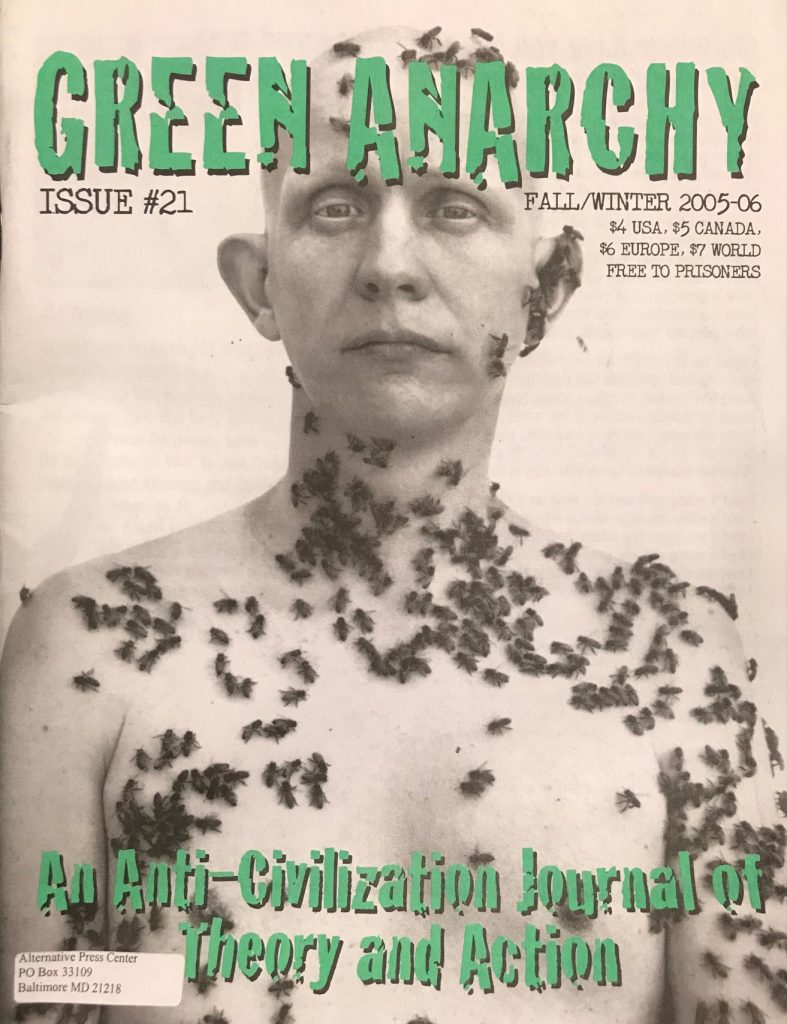
Green Anarchy # 21 (Fall/Winter 2005-06).

UMBC’s Alternative Press Center Collection, located within the Special Collections department, holds the back issues of the titles collected by the Alternative Press Center (APC) from its beginning to five years prior to the current year. The APC is a non-profit collective, located in Baltimore, dedicated to providing access to and increasing public awareness of the alternative press. Founded in 1969, it remains one of the oldest self-sustaining alternative media institutions in the United States. UMBC’s APC collection houses numerous non-mainstream media that address topics such as: capitalism, LGBTQ+, feminism, world politics, Marxism, Socialism, Africana studies, and environmentalism, among numerous others.

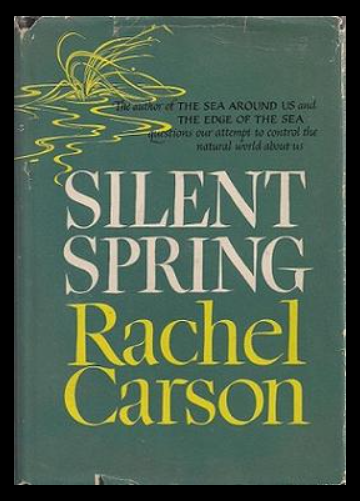
Rachel Carson, Silent Spring (Boston: Houghton Mifflin Company, 1962).

The environmental movement of the late 20th century was reinvigorated with the publication of Rachel Carson’s Silent Spring (1962). Her book sought to educate the public about humanity’s attempt to control nature through the use of pesticides and pollutants, leading to an ecosystem in crisis that we have now inherited. Prior to the internet, much of the materials surrounding the environmental movement’s cause was written, distributed, and published through non-mainstream newspapers and magazines. In like manner, the grassroots quality of the eco-movement similarly matched the DIY attitude of the underground comic scene—especially when political worlds collided.

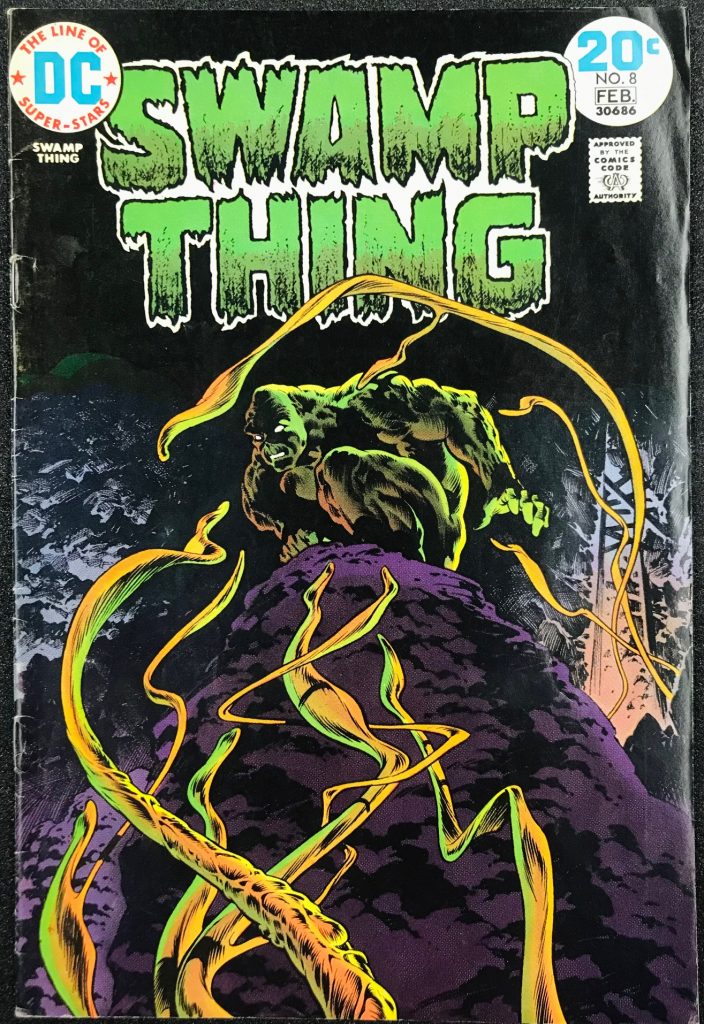
Swamp Thing Vol. 3 No. 8 (1974) Published by National Periodical Publications.

There are an abundance of comics dealing with the implications of nuclear fallout and chemical/biological warfare, seen in series’ like Toxic Avenger and Swamp Thing. These comics often touch on the conflicted relationship between humanity and the environment. However, many artists chose the comic medium as a way to tell more tangible stories of environmental hazards that educated its readers in an attempt to reach a wider audience. 

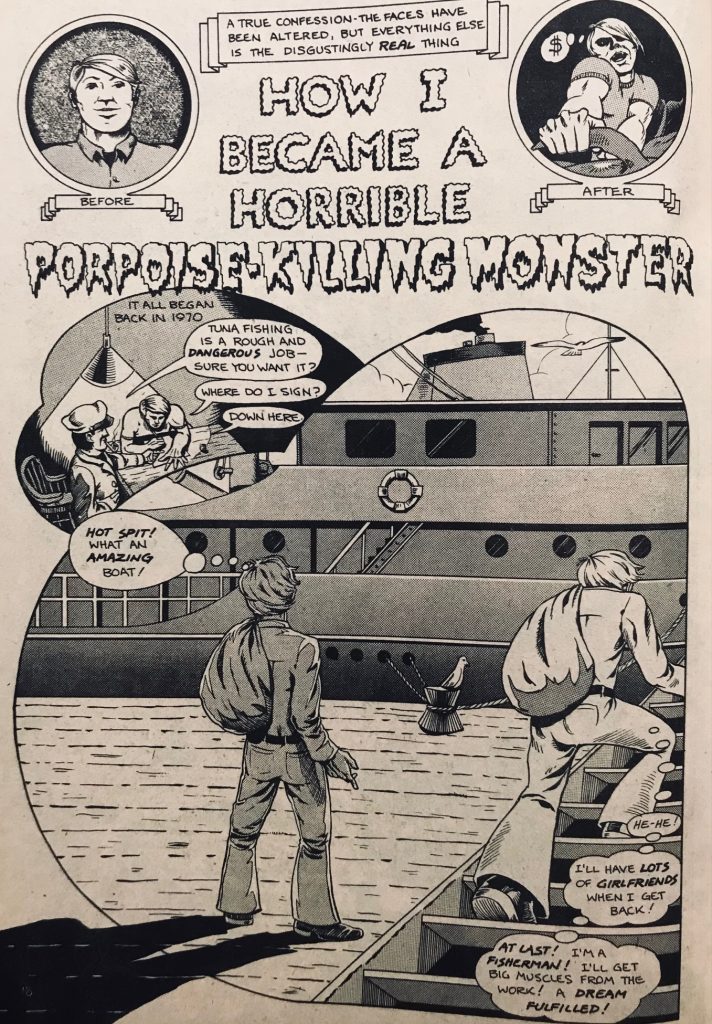
Net Profit (1974) Ecomix Publications

Net Profit was a non-profit comic book that explored the life of porpoises, dolphins, and whales through the lens of the commercial fishing industry. It was a collaborative effort of activist writers, artists and ex-tuna fisherman dedicated to bringing awareness and stopping the needless killing of sea mammals in fishing commercial nets.

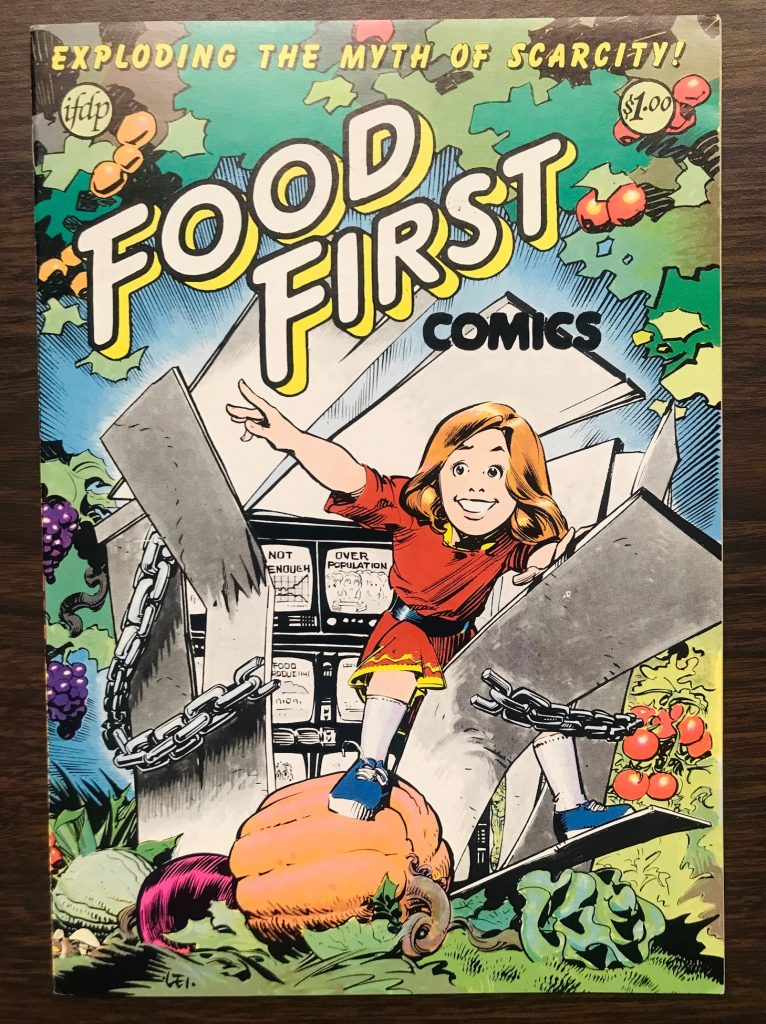
Food First Comics (1982) Published by Institute for Food and Development Policy.

Food First Comics was an Underground Comic that challenged the Malthusian notion of food shortage as a population problem and rather argued that it was a reflection of capitalist manipulation of land, agriculture, and food production. Likewise in Conservation, an APC title, writers tackle the sustainability of organic farming and eating locally.

Conservation Vol. 9 No. 3 (July-September 2008) Published by Society for Conservation Biology.

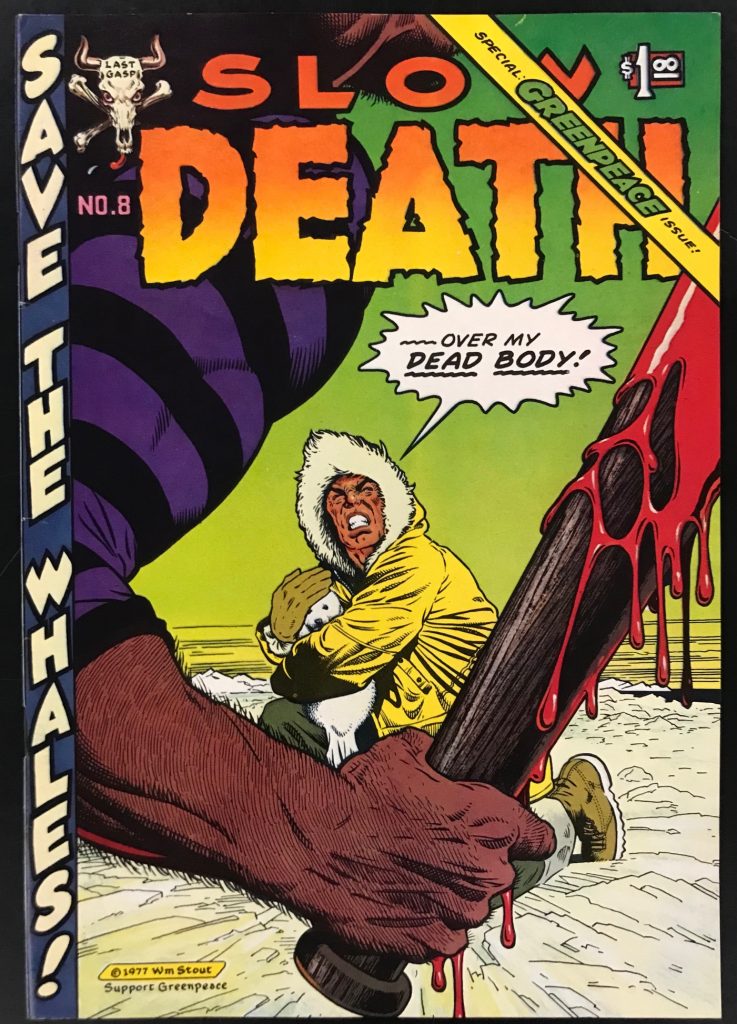
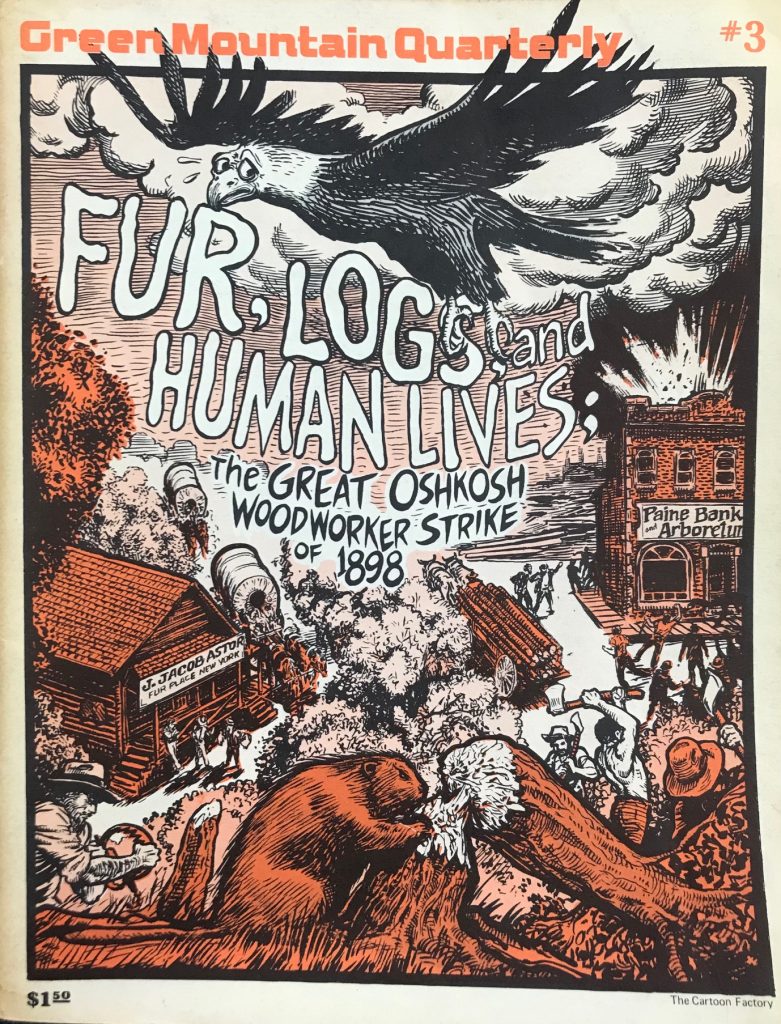
In Slow Death no. 8, artists comment on the issue of animal extinction with stories of endangered species and inhumane hunting practices like seal clubbing.  APC titles like Green Mountain Quarterly frequently cover topics like deforestation’s impact on humans, animal extinction, and the ecosystem using comic style art to attract readers.

Slow Death No. 8 (1977) Last Gasp Publishing.

Underground Comix and The Alternative Press follow a DIY ethic that serves to inform and entertain the public through creative collectivity. The evolution of the comic book can be seen through titles that highlight contemporary issues like environmentalism, the effects of industrial capitalism on the environment, and ways that individuals can make a difference toward a healthier and more sustainable ecosystem.

Green Mountain Quarterly #3 (May 1976) Published by Green Mountain Editions.


The Underground Comix Collection Exhibit can be seen in the Albin O. Kuhn Library Rotunda from April 10–May 20, 2024. All comics featured are available for research use in the UMBC Special Collections Underground Comix collection. Alternative Press Center publications are available through Special Collections. Special Collections is open M-W 12-4pm and Thursday 12-7pm. The exhibit was curated by Special Collections graduate assistants Mark Breeding, M.A. ’24, History and Finny Rocca, M.A. ‘20, History. This blog post was written by Mark Breeding.