Categories

Translating Moscow for Marylanders: Paul W. Ward and The Sun’s Moscow Bureau in the Early Cold War

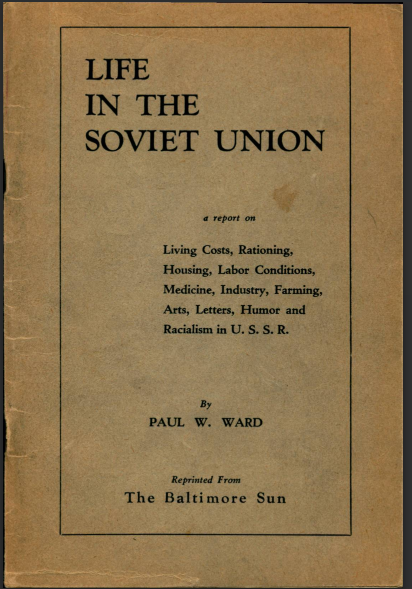
Cover of Life in the Soviet Union

In 2006, Tribune Co. announced that all smaller affiliated newspapers would close their foreign bureaus by 2008. This included The Baltimore Sun’s Moscow Bureau. As of 2024, the paper has not revived any of its foreign bureaus. Such a reversal of fortunes is notable, given the Moscow Bureau’s prestigious reputation. Perhaps the peak of this was Paul W. Ward’s Life in the Soviet Union. Throughout 1947, Ward published a series of articles detailing his experiences living in Moscow as The Sun’s foreign correspondent. The series won him a Pulitzer and was republished as a pamphlet. A copy of said pamphlet is held in the Needle Collection at UMBC Special Collections.
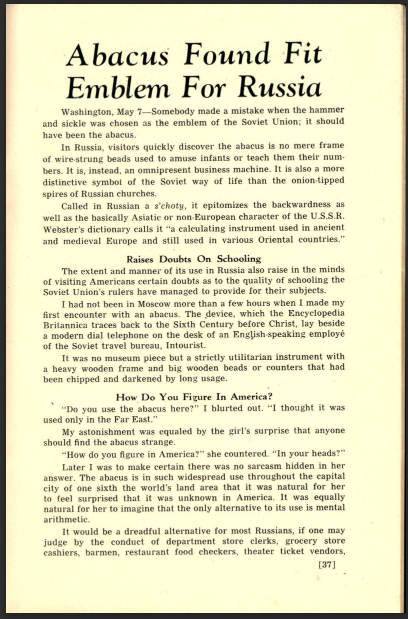
Pamphlet article titled Abacus Found Fit Emblem for Russia

Throughout these articles, Ward provides a narrative of everyday life in the Soviet Union that conforms to the tropes of early Cold War writings on the nation. He contrasted Soviet poverty and authoritarianism negatively with American liberty and prosperity. There is also a distinctly racist tone to certain articles. He treated Russians as distinctly Asian rather than European, and therefore dismissed them as primitive. Further, Ward appeared not to speak Russian. His anecdotes were drawn from English-speaking residents of Moscow or from interpreters, limiting the sources he uses for his reporting. However, Ward won a Pulitzer for a reason. He was talented at digging into city life and effectively and persuasively communicating his findings on issues ranging from the Soviet militias to the cost of living. Ward’s work reflected both how The Sun’s foreign bureaus provided in-depth, on-the-ground coverage in the mid-20th century and the limits of that coverage, often rooted in reporters’ ideologically motivated assumptions about the people they covered.

Ward’s pamphlet can be viewed on-site in the Special Collections reading room. This post was written by Yoni Isaacs, M.A., history, a former graduate assistant in Special Collections. Thank you, Yoni!

Sources

Nick Madigan, “Tribune Co. is Closing Sun’s Foreign Bureaus,” Baltimore Sun, July 7, 2006.

David Folkenflik, “More crime and conservatism: How new owners are changing ‘The Baltimore Sun,’” NPR, Feb. 26, 2024.

“Paul W. Ward Dead at 71; Won Pulitzer Prize in ’48,” New York Times, Nov. 25, 1976.

Paul W. Ward, Life in the Soviet Union (Baltimore: Baltimore Sun, 1947), 1. Call number Needle HC 335.7 .W37 1947.  

Categories

Founding and Firsts: UMBC at 60

Black and white images of UMBC with exhibit title and dates

September 19, 2026 marks 60 years since UMBC’s first classes were held, but the history of UMBC’s founding includes many other important firsts. Visit the Library Rotunda to explore key historical documents from the University Archives and learn more about the development, planning, and the important mark left on our campus by the school’s first students.

Founding and Firsts: UMBC at 60 will be on display through November 1. The exhibit was curated by Emma Sigrist, Interlibrary Loan Lending Specialist, and is part of the Library’s Fall semester programming for the Maryland Semiquincentennial. See the full list of programming here.

Join Emma and archivist Lindsey Loeper on Wednesday October 28 during free hour (12-1pm) for a hands-on experience with the University Archives and to pick up a button made just for the event!

Categories

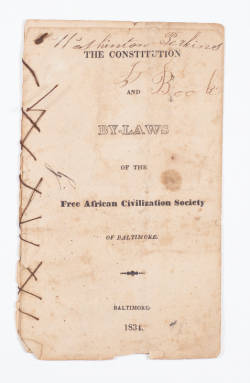
The constitution and by-laws of the Free African Civilization Society of Baltimore

Front cover of a handstitched pamphlet
The constitution and by-laws of the Free African Civilization Society of Baltimore. Baltimore, 1834. Call no. Arnold HS2261.B3 1834

This pamphlet was distributed to members of the Free African Civilization Society of Baltimore, a Black benevolent society was a source of monetary, spiritual, and community support for free and formally enslaved Black men in the late 18th through the mid 19th centuries. The Free African Civilization Society of Baltimore had explicit membership requirements and provided monetary support for members at times of illness and to their family if the member died. 

In 2026, the Society of American Archivists (SAA) solicited one item from any archival repository that wished to participate in order to build a digital collection that showed the breadth of American history available in U.S. libraries, archives, and museums. Faculty and staff in the Albin O. Kuhn Library & Gallery nominated items for consideration, and the top four contenders were voted on by students attending the Spring 2026 Relax and Refuel event. This pamphlet received the most votes and became UMBC’s contribution to the SAA digital collection. It has also been added to UMBC’s Digital Collections website. Both platforms are open to the public.

This item was selected because it provides evidence of Baltimore’s early Black residents and the community that they built within the segregated city. This early example of mutual aid demonstrates the importance and power of community support for Black residents of Baltimore in the 1800s. There is also value in the provenance of the item, which is labeled with the name Washington Perkins, a free Black grocer who was born in 1810. 

This item can be viewed on-site in the Special Collections reading room or online at the links above.

Categories

Exploring 250 years of Maryland history

Join the Albin O. Kuhn Library & Gallery’s Special Collections department throughout the Fall semester as we commemorate 250 years of Maryland history. All semester long we will have exhibitions, events, and online programming highlighting the items in our collections that support scholarly historical research in Maryland. A full description of programming in Special Collections and the Library Gallery is below. 

Lewis Hine in Maryland

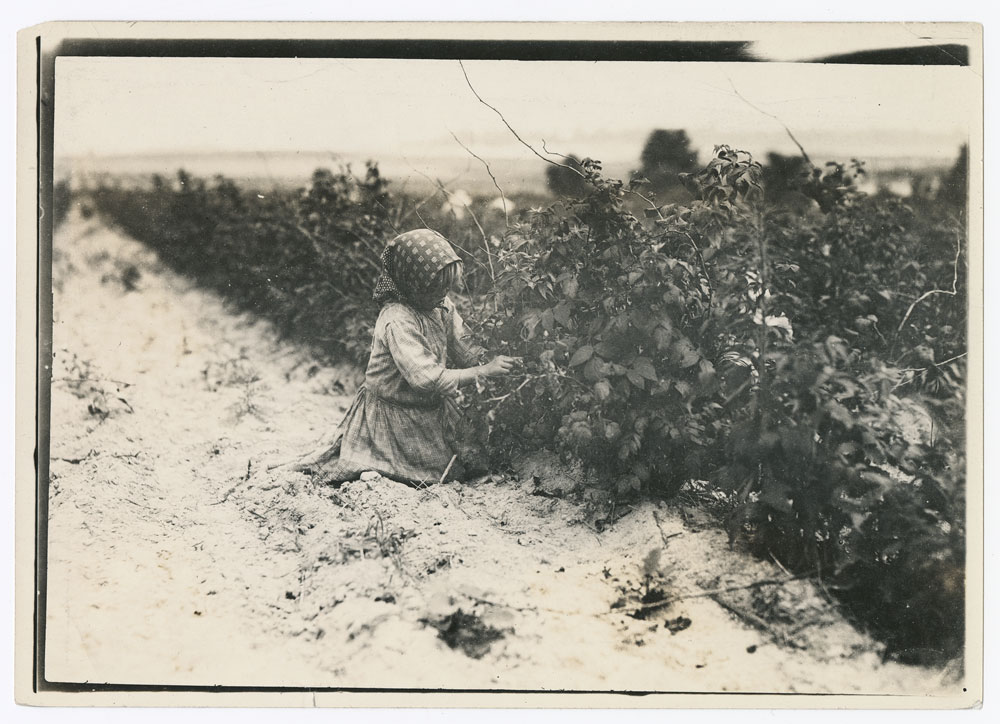
Young child kneels to pick berries
[This little six-year helper in Rock Creek berry field, near Baltimore, Md., was working hard. They begin about 4:30 A.M. and sometimes work until sunset. Her family (Scholtz) has been South–Bluffton, S.C.–for a few years. Seen in Appalachicola and Biloxi. They are Polish.] Location: Baltimore, Maryland.

The Library Gallery exhibition, Lewis Hine in Maryland, is open to the public through December 18, 2026. In July 1909, documentary photographer Lewis Hine (American, 1874–1940) visited Maryland, photographing child workers at Bottomley berry farms in Anne Arundel County and at the J. S. Farrand Packing Company in Baltimore. Drawn from UMBC’s Photography Collections, this exhibition explores the places and people behind these photographs. A selection of Hine’s most iconic and enduring images situates his Maryland work within the broader context of his documentary project.  

Lewis Hine in Maryland is accompanied by an installation of two works from artist Lisa Oppenheim’s Spine series, in which she appropriates images by Lewis Hine from the Library of Congress. Enlarged to life size, the photographs depict the backs of adolescent textile workers whose bodies were curved and misshapen by their labor. 

Curatorial tour and opening reception, Thursday September 17, 5:00 p.m. Free and open to the public.

Panel Discussion: Food and Labor in Maryland, Thursday October 22, 6:00 p.m. Followed by a reception. Free and open to the public.

Closing reception, Thursday December 4, 6:00 p.m.

Black and white photograph of UMBC's campus in 1966
Aerial photograph of UMBC campus, 1966

UMBC’s 60th anniversary

UMBC opened in 1966 and our students, faculty, staff and larger community of scholars has continued to make history over the past 60 years! A university history exhibit, curated by Library staff member Emma Sigrist, will be on display in the Library Rotunda from September 18 – November 1. Join Emma and archivist Lindsey Loeper on Wednesday October 28 during free hour for a hands-on exploration of university history including the first volumes of The Retriever Weekly and student yearbooks.

Women’s movement in Baltimore

The Library Rotunda exhibit “What is Liberation?”: Women’s Movement in Baltimore will be on display in the Library Rotunda from November 2 – 30. Curated by Morgan Dowty, program management specialist in the American Studies department, the exhibit brings together ephemera collected from a wide range of feminist activities occurring in Baltimore between 1970 and 1990. The exhibit borrows its title from the second issue of Women: A Journal of Liberation and the items on display are drawn from collection 334, the women’s movement in Baltimore collection, and the Alternative Press Center Collection.  

Maryland 250 blog series

All semester, Special Collections faculty and students will be highlighting items in our collections that connect us to Maryland’s history. Weekly posts will be available on the Special Collections blog and on the Library’s myUMBC page.

Open pages in a photobook showing black and white photographs
Page spread from Marion Warren, The Eye of the Beholder. Maryland State Archives, 1989.

#PhotobookFriday

Your favorite Instagram series is back this semester with a full list of Maryland photography books. Follow us at @umbcspecialcollections and don’t miss a post!

Research assistance

Are you working on your own Maryland history research project? Be sure to check out our local history research guide or schedule a personal research consultation.

Categories

Two field study openings for Fall 2026

The Special Collections department at the University of Maryland, Baltimore County has two open field study placements for the Fall 2026 semester. Part of the Albin O. Kuhn Library & Gallery at UMBC, Special Collections collects materials of enduring historical and cultural  value—housing, preserving, and making accessible materials that are original, rare, unique, fragile, and archival. Our collections and staff support UMBC’s research and educational mission and its dedication to cultural and ethnic diversity, social responsibility, and lifelong learning. UMBC is located in Catonsville, Maryland, just off of I-95, 695, and 195. Parking will be provided. Interested students should submit a current resume and 3 professional or educational references to Beth Saunders, curator and associate director of Special Collections, at bethsaunders@umbc.edu. Application review will begin in July and applications will be accepted until the positions are filled.  

Collection Level Records

UMBC Special Collections plans to adopt Archives Space as our new content management system as our collections have outgrown our current system, PastPerfect. For this project, we are performing a mass review and standardization of our records to support this transition. It is our ultimate goal to have a public facing record for each archival collection to significantly improve access to our unprocessed collections. 

The metadata standardization intern would exclusively work on ensuring that the required fields to publish a collection level record for unprocessed collections are complete. This position provides the selected student an opportunity to learn and expand on their research skills while aiding our department in increasing the visibility of our collections. This is also a publishing opportunity for students, as they will be listed as a co-author of finding aids, the primary descriptive resource of an archival collection.

Students will be provided various research tools to reference, including our current content management system, PastPerfect, to populate a standardized google form, which will give Special Collections staff access to data that can be quickly published to our Special Collections finding aid site. 

Maryland 250 Outreach and Exhibition

UMBC Special Collections will be participating in the statewide Maryland 250 celebration this Fall. Our collections include extensive documentation of Maryland’s history including social activism, media and print culture, documentary and fine art photography, folklife traditions and artistic communities, and more! MD250 activities will include a multi-author blog series highlighting collection items that support research about Maryland communities, artists, and industry; at least two physical exhibits in the Albin O. Kuhn Library & Gallery’s Rotunda display space; an outreach event for the UMBC campus community; and related promotional content on the Special Collections Instagram page (@umbcspecialcollections). 

The field study student will contribute to these projects throughout the semester by:

  • assisting with photo documentation, 
  • text and display creation, editing, scheduling, and publication, 
  • exhibit planning, design, and installation,
  • and staffing events. 

The student will work directly with a broad range of collection materials and will gain experience writing about historical, primary source items for a general audience. Experience working with WordPress or a similar web publishing platform is preferred. The student will have the opportunity to co-curate at least one exhibit using collection items from Special Collections. The student will also learn general Special Collections procedures for security, handling, digitization, and general use of collection materials. While weekly on-site work at UMBC will be required, this may be structured as a hybrid position.